MLA
MLA
WHAT IS MLA?
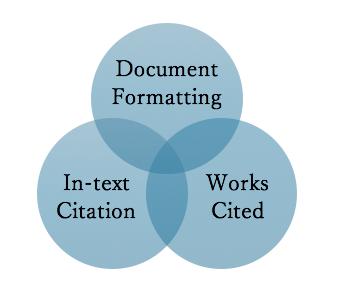
MLA stands for Modern Language Association, which is an organization recognized throughout the liberal arts and humanities as a "leading advocate for the study and teaching of languages and literature" (MLA.org). For first-year writing students, however, the term "MLA" most often refers to the formatting standards and expectations required for assignments. Please consult the Coastal Writers' Reference for a more detailed look at MLA. In general, we can think of MLA formatting as being comprised of three areas all interconnected and necessary for MLA compliance:
MLA DOCUMENT FORMATTING
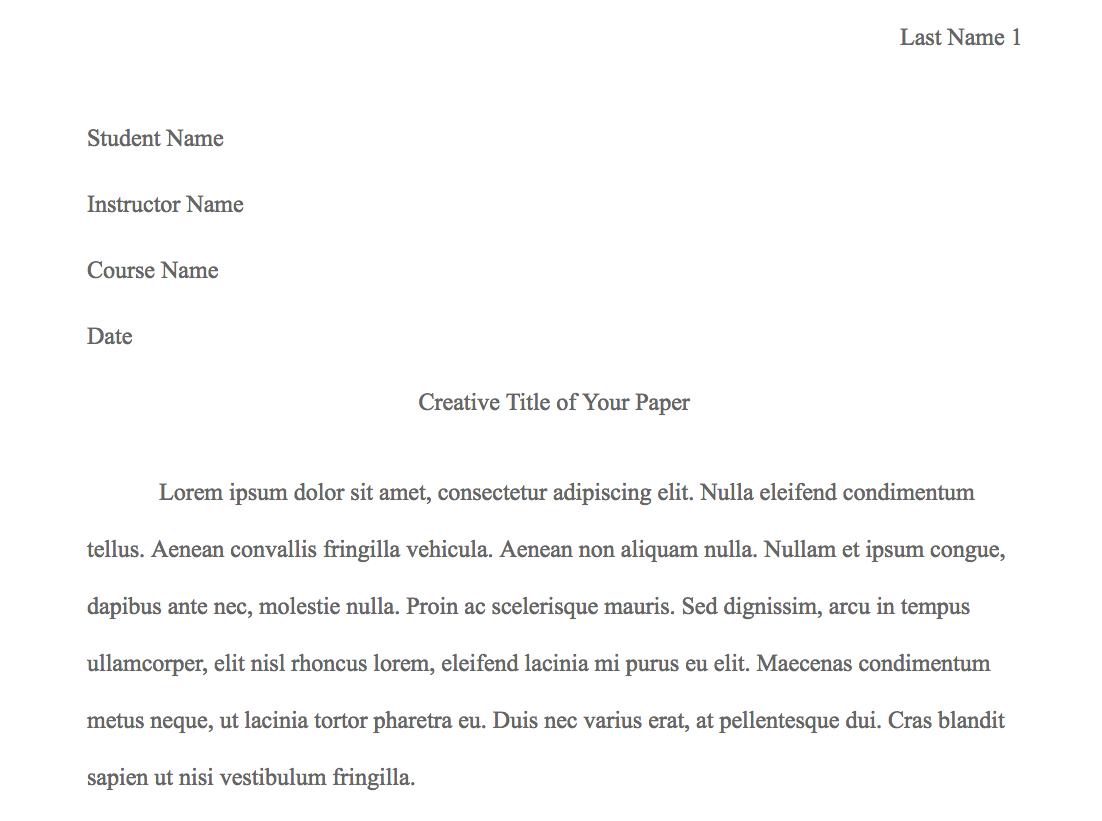
An MLA-style document exhibits several consistent features. All text should be in Times New Roman, 12 pt. black font, and double-spaced. The MLA heading should include (in this specific order) your first and last name, the professor's name, course name, and date. The MLA header is placed in the header of the document, justified right, and displays your last name and the page number. The title of the paper is centered and uses title case (all the important words are capitalized). The screenshot below is an example of an MLA-style document.
IN-TEXT (PARENTHETICAL) CITATIONS
Author-Page Method
- Source with a single author:
-
- Williams states that "Twitter increases student engagement" (72).
- "Twitter increases student engagement" (Williams 72).
- Williams shows that students feel more connected when Twitter is introduced (72-75).
- Source with two authors:
-
- Williams and Prudchenko state that "Twitter increases student engagement" (72).
- "Twitter increases student engagement" (Williams and Prudchenko 72).
- Source with three authors:
-
- Williams, Prudchenko, and Jones state that "Twitter increases engagement" (72).
- "Twitter increases student engagement" (Williams, Prudchenko, and Jones 72).
- Source with four or more authors:
-
- Williams et al. state that "Twitter increases engagement" (72).
- "Twitter increases student engagement" (Williams et al. 72).
- Source without page numbers:
-
- Williams states that "Twitter increases student engagement" (par. 4).
- "Twitter increases student engagement" (Williams, par. 4).
- Williams shows that students feel more connected when Twitter is introduced (pars. 3-4).
WORKS CITED
The Works Cited page begins on a new page, and has the title Works Cited centered (not bolded). The entry or entries should be double-spaced and use a hanging indent (Watch: "How to Use a Hanging Indent"). For instance, an example entry for a journal article would look like this:

Below are two commonly used citations. For a more exhaustive list of source types, consult the Coastal Writers' Reference.
Article in a Scholarly Journal
Author's name. "Title of the Article with All Important Words Capitalized." Journal Title volume number. Issue number (date of publication): pages. Print.
Article on a Web Site
Author's name. "Article Title with All Important Words Capitalized." Name of Web Site. Name of institution or organization associated with/producing the Web site. Date of posting/revision. Web. Date of access.
ASSIGNMENT
- Download this document: MLA Badge.docx / MLA Badges.pages
- Then, format the document according to MLA.
- Finally, list the following article on a Works Cited page: "Tweeting Your Way to Improved #Writing, #Reflection, and #Community"
RUBRIC
View the rubric associated with this assignment.
For citation, use:
Coastal Carolina University, Department of English, First-Year Writing Program. "MLA." Coastal Composition Commons, 24 August 2017, https://ccc.coastal.edu/task/mla/. Accessed xx xxxxxx xxxx.